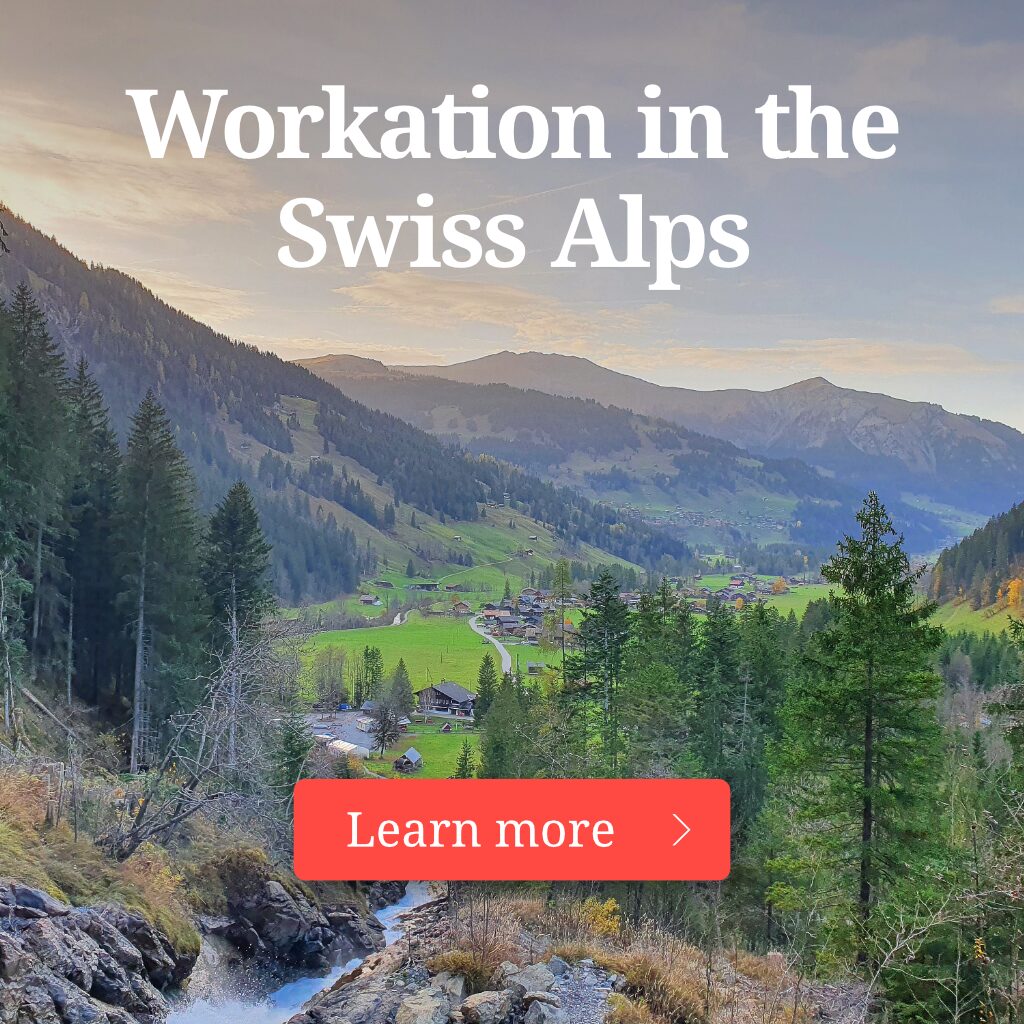

Workations are everywhere right now.
But if you’re responsible for people, budgets, and results, you’ve probably already realized something important:
Most content about workations is written for individuals, not companies.
Instagram posts. “Laptop by the pool” articles. Vague promises about productivity and happiness — with very little explanation of how to actually make this work inside a real organization.
This guide is for HR teams, founders, and team leads who want to go beyond the buzzword and understand:
👉 what a workation really is
👉 when it makes sense for a company
👉 how to structure it properly
👉 and how to avoid turning it into an expensive team holiday with Slack open
1. What a Workation Actually Is (and what it isn’t)
Let’s start by clearing up the confusion.
A workation is not:
-
a company retreat
-
a vacation with emails
-
a perk you throw in to look progressive
-
a one-week team trip packed with activities
A real workation is:
👉 a temporary relocation
👉 where employees continue their normal work
👉 from a fully equipped environment
👉 for a long enough period to settle into a routine
In practice, that usually means:
-
stays of 2 weeks to 3 months
-
proper accommodation (not hotels)
-
reliable coworking or workspaces
-
minimal “mandatory fun”
-
optional community and local integration
The key idea: work remains the priority, the location changes.
2. Why Companies Are Turning to Workations
The companies experimenting seriously with workations are usually facing one (or more) of these challenges:
1. Remote fatigue
Remote work didn’t fail — but endless Zoom calls from the same kitchen table did. Workations introduce environmental change without breaking routines.
2. Retention pressure
Talented people don’t just look at salary anymore. They look at lifestyle flexibility, autonomy, and meaning. Workations can be a retention lever — if done properly.
3. Team cohesion
Fully remote teams often struggle to build trust beyond tasks. Longer workations allow for organic connection, not forced bonding.
4. Employer branding
But this only works if it’s authentic. Smart candidates can smell a “marketing workation” from a mile away.
Important note:
If your company still struggles with basic remote work processes, jumping straight into workations is a mistake. Fix async communication first.
3. Who Workations Are (and Aren’t) For
Workations are powerful — but they’re not universal.
They work best for:
👉 Remote-first or remote-friendly teams
👉 Knowledge workers with autonomy
👉 Companies comfortable with asynchronous work
👉 Teams that don’t require constant real-time collaboration
They are harder for:
👉 Highly operational roles
👉 Teams dependent on strict schedules
👉 Organizations with heavy compliance constraints
And within the same company, not everyone needs to participate.
The best programs are opt-in, not mandatory.
4. The Biggest Mistake Companies Make
Trying to compress everything into one week.
Short workations often fail because:
-
people never settle
-
productivity dips
-
travel logistics dominate
-
it feels like a retreat disguised as work
The paradox is this:
👉 Longer stays are easier than short ones
After 7–10 days, people:
-
establish routines
-
stop treating it like a trip
-
work normally
-
integrate naturally with others
If you want real value, think weeks, not days.
5. Infrastructure Matters More Than Location
This is where many initiatives quietly break.
A successful workation needs three non-negotiables:
1. Proper accommodation
-
private space
-
good desks or room for one
-
stable internet
-
comfort for long stays
Hotels rarely work well beyond a few days.
2. Reliable workspaces
Coworking is not optional.
Even introverts benefit from separating work and living spaces.
3. A stable environment
-
quiet
-
predictable
-
walkable
-
not optimized for short-term tourism chaos
A beautiful location without infrastructure will fail every time.
6. Community Is the Invisible Multiplier
This is often underestimated.
People don’t remember the coworking Wi-Fi speed.
They remember how it felt to live and work there.
Strong workations include:
👉 a light community structure
👉 optional shared meals
👉 informal rituals (weekly check-ins, walks, dinners)
👉 local connection, not just internal team bonding
This doesn’t mean overprogramming.
It means creating the conditions for connection, then getting out of the way.
Companies that ignore this often see:
-
people working in isolation
-
limited cross-team interaction
-
“I could have done this anywhere” feedback
7. Different Workation Formats for Companies
There is no single model. Here are the most common ones:
1. Individual workations
Employees can relocate temporarily on their own or with partners.
Low cost, high autonomy, minimal coordination.
2. Team-based workations
A specific team relocates together.
Great for alignment, onboarding, or deep work phases.
3. Open company programs
Employees choose from pre-approved destinations and timeframes.
Scales better, but requires strong guidelines.
4. Hybrid models
A mix of company-organized hubs and individual flexibility.
The right format depends on:
👉 team size
👉 maturity of remote culture
👉 HR capacity
👉 budget tolerance
8. HR, Legal & Policy Considerations (Yes, They Matter)
Ignoring this part is risky.
Key questions to clarify:
-
Maximum duration allowed
-
Tax and social security implications
-
Insurance coverage
-
Timezone expectations
-
Performance evaluation during workation periods
Good workation policies are:
👉 clear
👉 limited in scope
👉 easy to understand
👉 reviewed regularly
You don’t need to solve everything upfront — but you do need guardrails.
9. Measuring the Impact (Without Overengineering It)
You don’t need a 40-slide report.
Track:
👉 participation rates
👉 retention of participants vs non-participants
👉 self-reported productivity
👉 engagement and satisfaction
👉 qualitative feedback
The most useful insights often come from:
-
post-workation debriefs
-
manager feedback
-
repeat participation
If people want to do it again, you’re on the right track.
10. Workations Are Not a Perk — They’re a Strategic Tool
This is the most important mindset shift.
Workations work when they are:
👉 intentional
👉 well-structured
👉 aligned with company culture
👉 designed for real work
They fail when they’re treated as:
-
a gimmick
-
a retention band-aid
-
a marketing stunt
-
a one-off experiment with no follow-up
The companies getting this right aren’t asking:
“Is this cool?”
They’re asking:
👉 “Does this help our people work better, live better, and stay longer?”
When the answer is yes — workations stop being a trend and become part of how work actually happens.
Final thought
The future of work is not about working from anywhere.
It’s about working from the right places, at the right time, with the right structure.
Workations, done properly, are one of the clearest expressions of that future.
If you’re willing to think long-term — and design for humans, not headlines — they’re worth the effort.