
Every year, tourism organisations celebrate the same figures.
Number of arrivals.
Hotel occupancy.
International visitors.
Average daily spend.
These metrics have been used for decades to evaluate whether a destination is succeeding.
But they don’t tell the whole story.
As remote work continues to reshape how people travel, destinations are also beginning to rethink what successful tourism actually looks like. We’ve previously explored this shift in The Rise of Slow Remote Work: Why More Professionals Are Choosing 1–3 Month Workations, where we explain why an increasing number of professionals are choosing longer, more immersive stays over fast-paced travel.
This naturally raises another question:
Are all visitors really creating the same value for local communities?
A remote worker spending two months in a destination is often counted exactly the same way as any other tourist—simply as another visitor.
Yet their behaviour, spending patterns and relationship with the destination are fundamentally different.
Rather than passing through, many become temporary residents.
And that distinction matters.
Tourism Has Traditionally Rewarded Volume
For decades, destinations have largely competed for one thing: more visitors.
More flights.
More hotel nights.
More cruise passengers.
More arrivals.
This made sense when tourism mainly consisted of holidays lasting anywhere between three days and two weeks.
The industry became highly optimised around this model.
But increasing visitor numbers has also produced growing challenges:
- overcrowding
- pressure on infrastructure
- rising housing costs
- seasonal economies
- environmental impact
- resident frustration
Across Europe, destinations from Barcelona to Amsterdam, Venice to Dubrovnik have begun questioning whether attracting ever more visitors is always the right objective.
Many now speak about quality over quantity.
The challenge, however, is defining what “quality” actually means.
Remote Workers Travel Differently
Someone visiting for a weekend behaves very differently from someone living somewhere for two months.
Weekend visitors usually have a limited schedule.
They visit major attractions.
Eat in tourist hotspots.
Take photos.
Buy souvenirs.
Then leave.
Remote workers have a completely different rhythm.
Because they’re living normal lives while working, they gradually become integrated into everyday local routines.
Instead of rushing through a destination, they begin participating in it.
They buy groceries every week.
They discover neighbourhood cafés.
They become regular customers.
They join fitness classes.
They attend local events.
They meet residents.
They often start exploring places that tourists rarely visit.
The destination stops being a holiday backdrop.
It becomes home—if only temporarily.
Spending Becomes More Diverse
Tourism statistics often focus on average daily expenditure.
But equally important is where money is spent.
Long-stay visitors typically distribute their spending across a much wider variety of local businesses.
A typical month might include:
- supermarkets
- bakeries
- cafés
- restaurants
- pharmacies
- hairdressers
- gyms
- yoga studios
- coworking spaces
- local transport
- farmers’ markets
- outdoor activities
- repair services
- local retail
- language classes
- cultural events
Instead of concentrating spending into a few tourist-oriented businesses, their expenditure often spreads across the wider local economy.
This diversification benefits businesses that may see relatively little income from traditional tourism.
Seasonality Is One of Tourism’s Biggest Problems
Many destinations don’t actually struggle to attract tourists.
They struggle to attract tourists outside peak season.
Hotels remain empty.
Restaurants reduce opening hours.
Seasonal workers leave.
Businesses lose revenue.
Public infrastructure remains underused.
Remote workers often have much greater flexibility.
Unlike traditional holidaymakers, they aren’t restricted to school holidays.
Many deliberately travel during quieter months because:
- accommodation is cheaper
- destinations are less crowded
- weather is still pleasant
- they prefer a slower lifestyle
This creates opportunities for destinations to smooth demand across the year rather than concentrating economic activity into a few busy weeks.
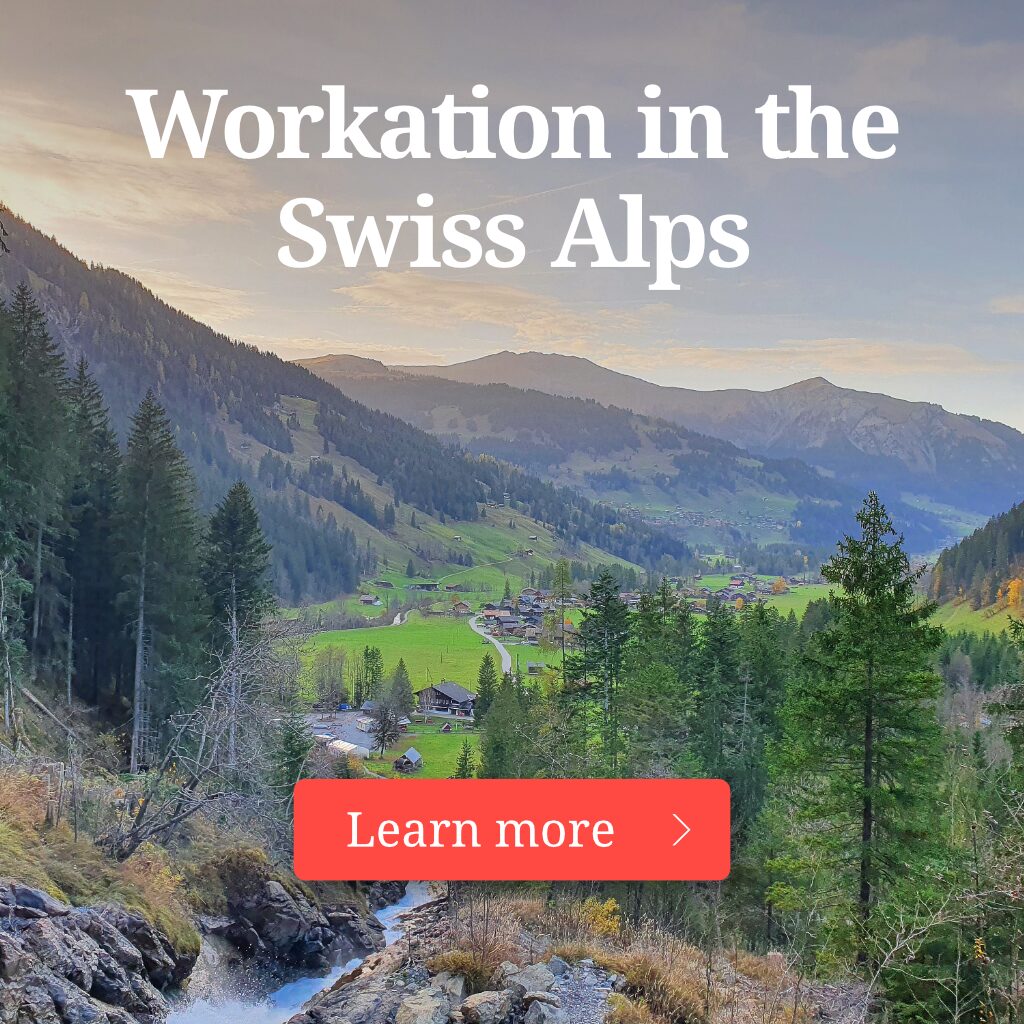
We’ve seen this first-hand while working with destinations across Europe that are looking to reduce their dependence on peak tourism. In our article on helping rural towns fight seasonality through remote work, we explain how attracting long-stay remote workers during quieter months can help support local businesses, extend the tourism season and build a more resilient local economy without relying solely on increasing visitor numbers.
Temporary Residents Behave More Like Locals
One of the most interesting differences isn’t economic.
It’s behavioural.
Most tourists consume a destination.
Long-stay visitors begin participating in it.
Many quickly develop routines.
The same morning coffee.
The same grocery store.
The same running route.
The same climbing gym.
The same local market.
The barista recognises them.
Restaurant owners remember their order.
Neighbours start saying hello.
This familiarity creates something tourism statistics rarely measure: social integration.
Word-of-Mouth Has Long-Term Value
Marketing campaigns are expensive.
Yet many destinations underestimate one of their most valuable promotional tools.
Satisfied long-stay visitors.
Remote workers often document daily life through:
- YouTube
- blogs
- newsletters
- podcasts
Unlike traditional holiday content that focuses on famous landmarks, long-stay visitors often showcase everyday experiences.
The local bakery.
The hiking trail.
The coworking space.
The quiet square.
The hidden café.
Friends ask questions.
Recommendations spread naturally.
Many future visitors discover destinations through these authentic stories rather than tourism advertisements.
Repeat Visits Become Much More Likely
Perhaps the greatest difference is psychological.
Someone who spends two months somewhere develops emotional attachment.
Favourite places.
Favourite restaurants.
Local friends.
Daily routines.
Memories that go beyond sightseeing.
Returning becomes much easier because they’re not discovering a new destination.
They’re returning to a familiar one.
Many remote workers revisit destinations multiple times over several years.
Some even relocate permanently.
Others invest locally.
Some create businesses.
A short holiday rarely produces that level of connection.
The Housing Debate
Of course, discussions around remote workers inevitably raise concerns.
Housing is perhaps the most common.
In cities experiencing severe housing shortages, increasing demand from remote workers can contribute to rising rental prices.
This concern is legitimate.
But context matters.
Not every destination faces the same challenges.
Many rural areas, mountain villages and smaller towns actually struggle with the opposite problem:
- empty accommodation
- declining populations
- underused tourism infrastructure
- businesses dependent on short seasons
For these places, attracting long-stay visitors can strengthen local economies without significantly affecting housing availability.
The key is recognising that one policy does not fit every destination.
Barcelona and a Swiss mountain village face very different realities.
Sustainable Tourism Isn’t Just Environmental
Sustainability is often discussed in terms of carbon emissions.
But economic sustainability matters too.
Can businesses survive year-round?
Can local communities remain vibrant outside summer?
Can young residents find stable employment?
Can infrastructure be used more efficiently?
Long-stay visitors won’t solve every challenge.
But they may help improve economic resilience by supporting businesses during quieter periods.
Measuring What Actually Matters
Most tourism dashboards still prioritise:
- arrivals
- overnight stays
- occupancy
- visitor spending
These remain valuable indicators.
But perhaps destinations should begin measuring additional metrics such as:
- average length of stay
- repeat visitation
- local business diversity
- community participation
- off-season economic contribution
- local integration
- visitor recommendations
- return intention
These indicators may provide a more complete picture of long-term value.
A Shift From Consumption to Belonging
Traditional tourism often encourages visitors to consume destinations.
See everything.
Do everything.
Leave.
Long-stay travel encourages something different.
Slowing down.
Building routines.
Getting to know people.
Supporting local businesses.
Feeling part of a community.
The destination becomes less of a product and more of a place where everyday life happens.
That shift changes both visitor behaviour and economic impact.
Looking Beyond Visitor Numbers
Tourism is evolving.
Remote work has created an entirely new category of traveller—people who combine work with living temporarily in another destination.
They don’t replace traditional tourists.
Nor should they.
Weekend visitors, families, business travellers and remote workers all contribute differently.
The question isn’t which type of visitor is “better.”
It’s whether destinations are measuring value in the most meaningful way.
A remote worker staying for two months isn’t simply equivalent to eight weekend tourists.
They interact differently.
Spend differently.
Build relationships differently.
Often return.
Often recommend the destination.
And in many places, especially outside peak season, that longer-term engagement can create value that extends well beyond simple visitor counts.
As destinations rethink tourism strategies for the coming decades, perhaps it’s time to measure more than arrivals alone.
Perhaps it’s time to measure belonging.